Strategic Context
Pain in hospital is reported when somebody asks. Somebody asks on a ward round. Deterioration does not wait for a ward round.
The standard model is periodic nurse checks and manual recording, which leaves hours where a patient is in significant pain, or getting worse, and the record is empty. Prompt closes that gap: patients report pain, symptoms and wellness from their own device, continuously, with AI-assisted triage between what they submit and what a clinician sees.
The platform had to satisfy four constituencies at once. A medicated patient who will not read instructions. A nurse mid-shift who will not learn a new product. A hospital IT estate nobody on the project controlled. National clinical governance, which sets the escalation rules rather than taking suggestions. None of them able to compromise for the others.
My Role
I was responsible for the complete UI and UX design of the Mserv platform.
My work included:
- Designing the native iOS and Android patient applications
- Designing clinician and administrative web dashboards
- Creating the visual identity and brand system across mobile and web platforms
- Structuring patient reporting flows and escalation interfaces
- Designing information hierarchy for clinically relevant patient data
- Ensuring interfaces remained usable for patients in hospital environments
Clinical escalation workflows such as Martha's Rule were defined by healthcare governance and regulatory guidance. My role was to translate these workflows into clear and safe interface interactions.
Clinical input came from inside the client. Mserv is led by practising NHS clinicians: Barts Health's Clinical Director of Anaesthesia and Cardiac Intensive Care, and its Clinical Director for deteriorating patients. They took the designs to their own clinical teams and brought the feedback back.
Similarly, integrations with hospital electronic health record systems were defined by the technical architecture team. My responsibility was ensuring that the surfaced data was understandable, prioritised correctly and usable for clinicians.
Patient Reporting Simplicity
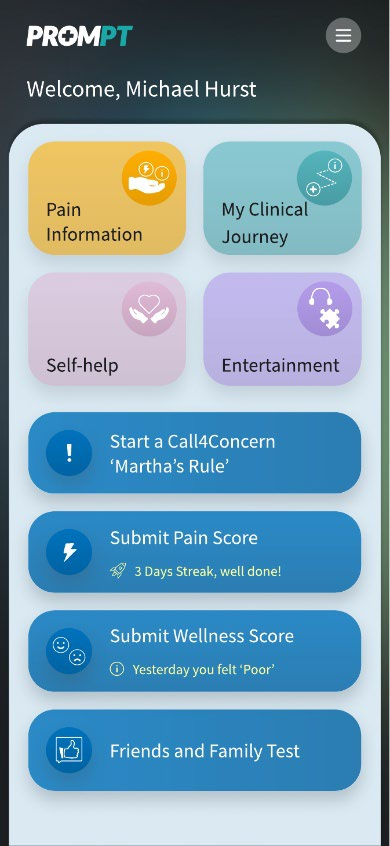
Prompt started as an aftercare app for reporting pain before and after surgery, built around four pain buttons. When Martha's Rule, the Friends and Family Test and further features were added, that structure no longer held, so I redesigned the home screen to bring everything a patient needs into one place, replacing separate paper forms.
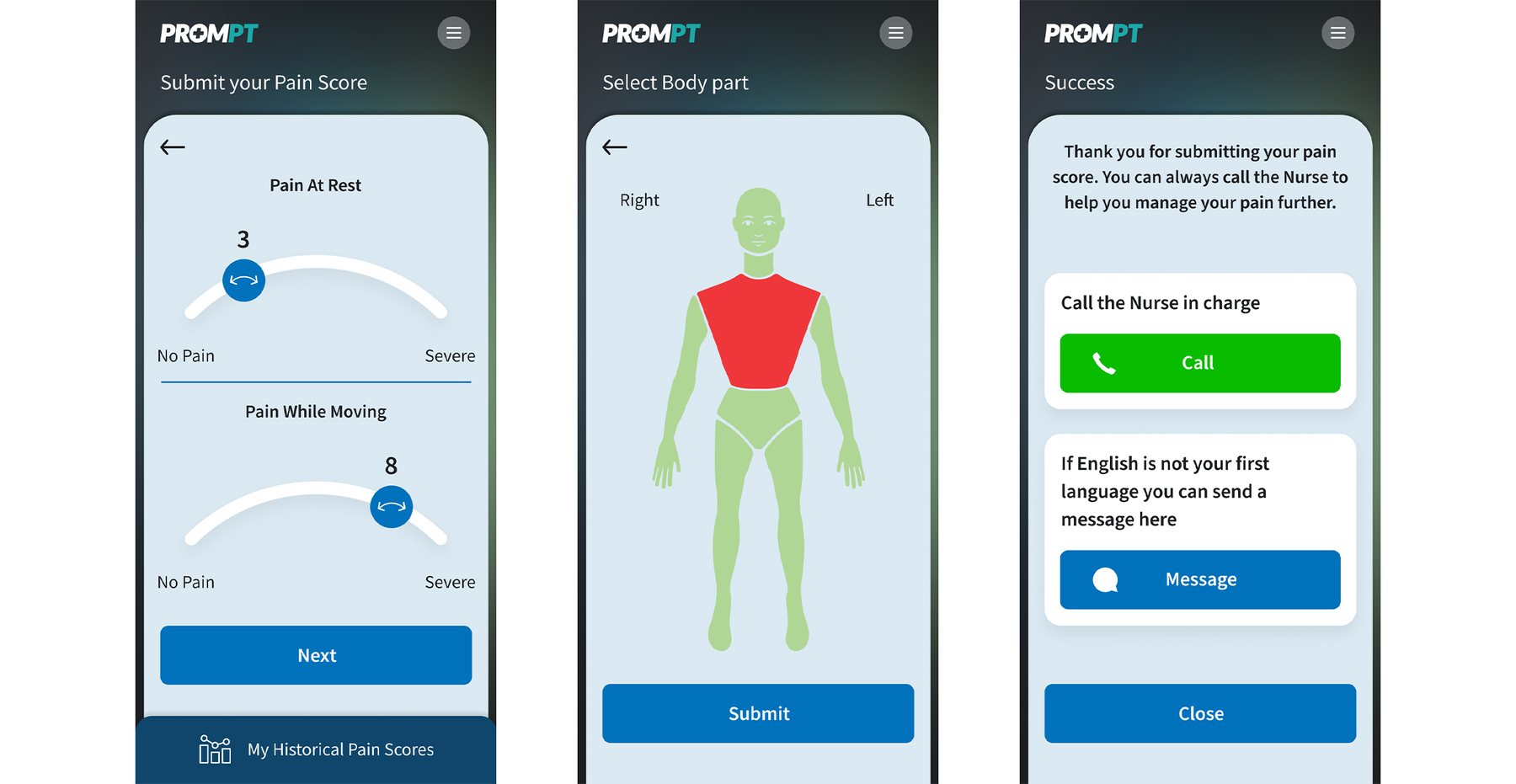
Pain at rest and pain while moving are scored on one screen. I replaced the original vertical slider with an arc because it felt easier to use. That was my judgement rather than a tested result, and patient feedback on it came in after I had left.
The original app had a front and back body map. The client asked for the back view to be removed in the redesign, to reduce data points and keep the trial streamlined.
After submitting, a patient can call the nurse in charge straight away, or send a message if English isn't their first language.
Safe Escalation Interfaces
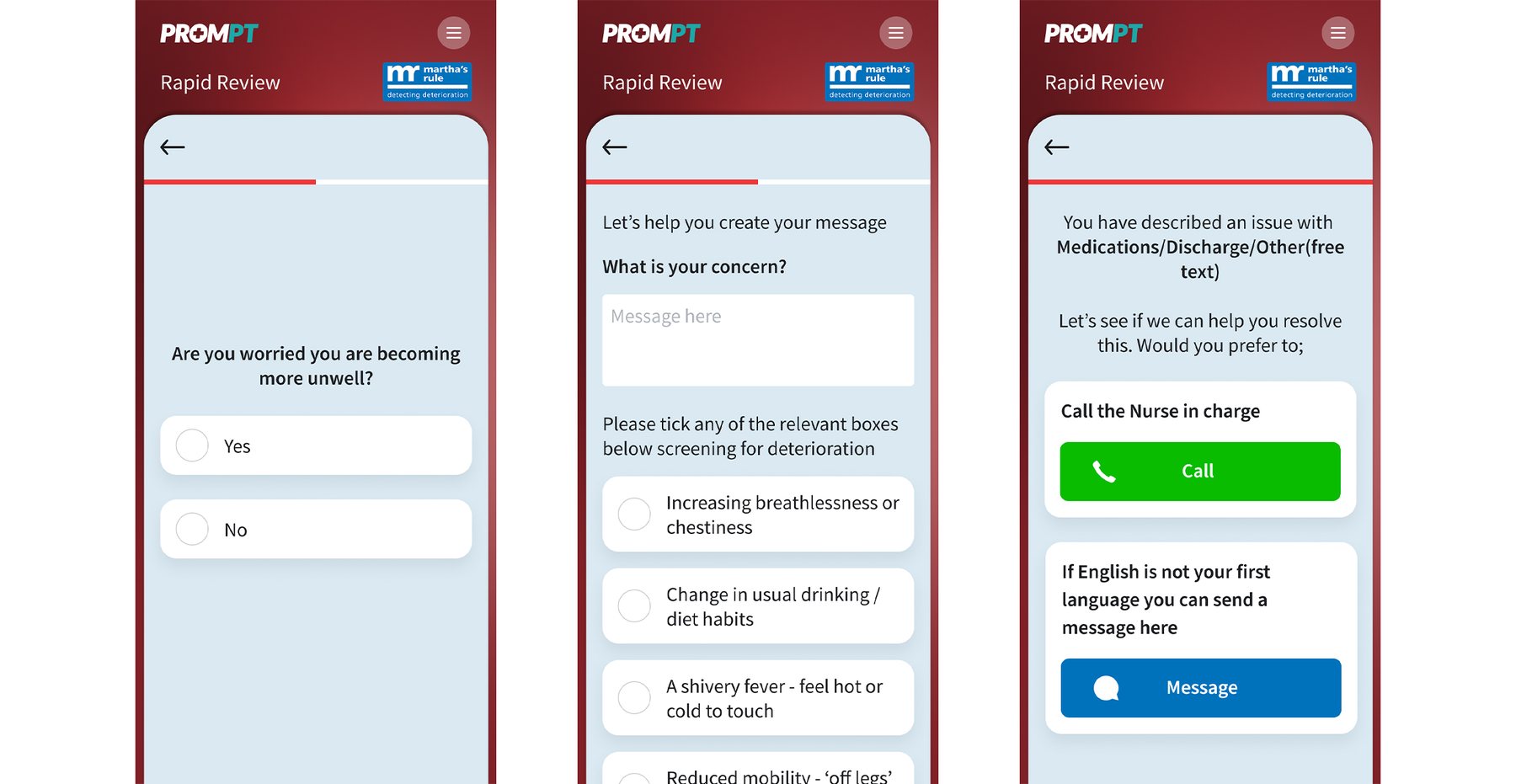
When patient-reported symptoms reach defined thresholds, escalation workflows guide the patient through structured safety questions and response pathways.
The interface was designed to clearly present escalation prompts, guide patients through decision steps and provide confirmation when alerts are triggered.
Clinical Visibility and Data Interpretation
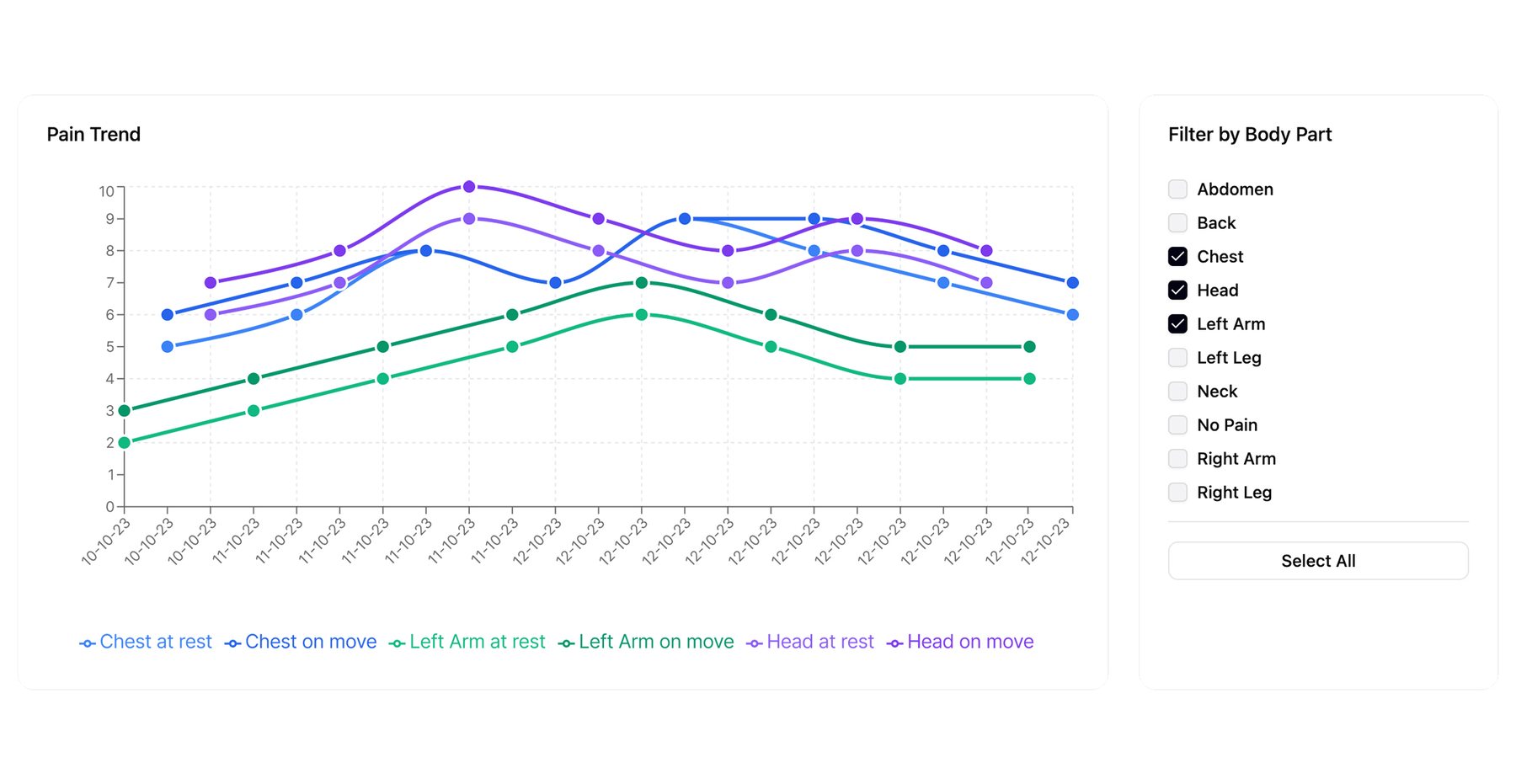
Clinicians require clear visibility of patient data trends rather than isolated inputs.
The web-based dashboard was designed to provide:
- Structured patient reporting data
- Pain trend visualisations
- Patient history views
- Administrative reporting tools
Visual hierarchy focused on highlighting clinically relevant information quickly, allowing hospital teams to prioritise intervention where necessary.
Constraints
The platform operates within a highly regulated healthcare environment.
Design considerations included:
- Alignment with NHS digital standards and governance requirements
- Interoperability with hospital electronic health record systems
- Accessibility for patients with varied physical and cognitive states
- Maintaining simplicity while supporting complex clinical workflows
Impact
- Real-time visibility of patient pain and deterioration
- Faster escalation between patient reporting and clinical intervention
- Structured dashboards supporting clinical oversight and monitoring
- More consistent and standardised pain reporting across wards