Strategic Context
STX is LSEG's core voice network, connecting trading firms across the UK and Ireland. It ran over fixed-line PSTN infrastructure terminating into trading turrets and PBX systems.
With BT retiring PSTN, LSEG initiated a full migration to cloud delivery. That meant moving a regulated, latency-sensitive, compliance-recorded network onto the internet, in phases, while trading continued. STX numbering had to be preserved, legacy Featurenet had to keep working throughout, and the new system had to deliver fixed-line equivalent security over internet channels.
The harder design problem sat above all of that. A browser client had to feel as trustworthy as a handset bolted to a desk. Connection state, encryption status, recording visibility and session continuity all had to be readable at a glance, by someone who picked up a call mid-trade and was not going to read a release note first.
My Role
I led UI/UX across the browser and Android applications, focusing on secure interaction modelling and behavioural consistency.
Responsibilities included:
- Defining cross-platform interaction patterns
- Designing call state transitions and trust signalling
- Structuring directory search and number resolution flows
- Designing administrative and recording tooling
- Aligning interaction decisions with telecom infrastructure constraints
- Accounting for accessibility within a high-security environment
LSEG gave us basic brand guidelines and no UI direction, so the interface decisions were mine. A fast, cost-effective build was part of the brief.
Identity provisioning and onboarding were managed by LSEG. My focus was the live communication and oversight layer.
Call State & Trust Signalling
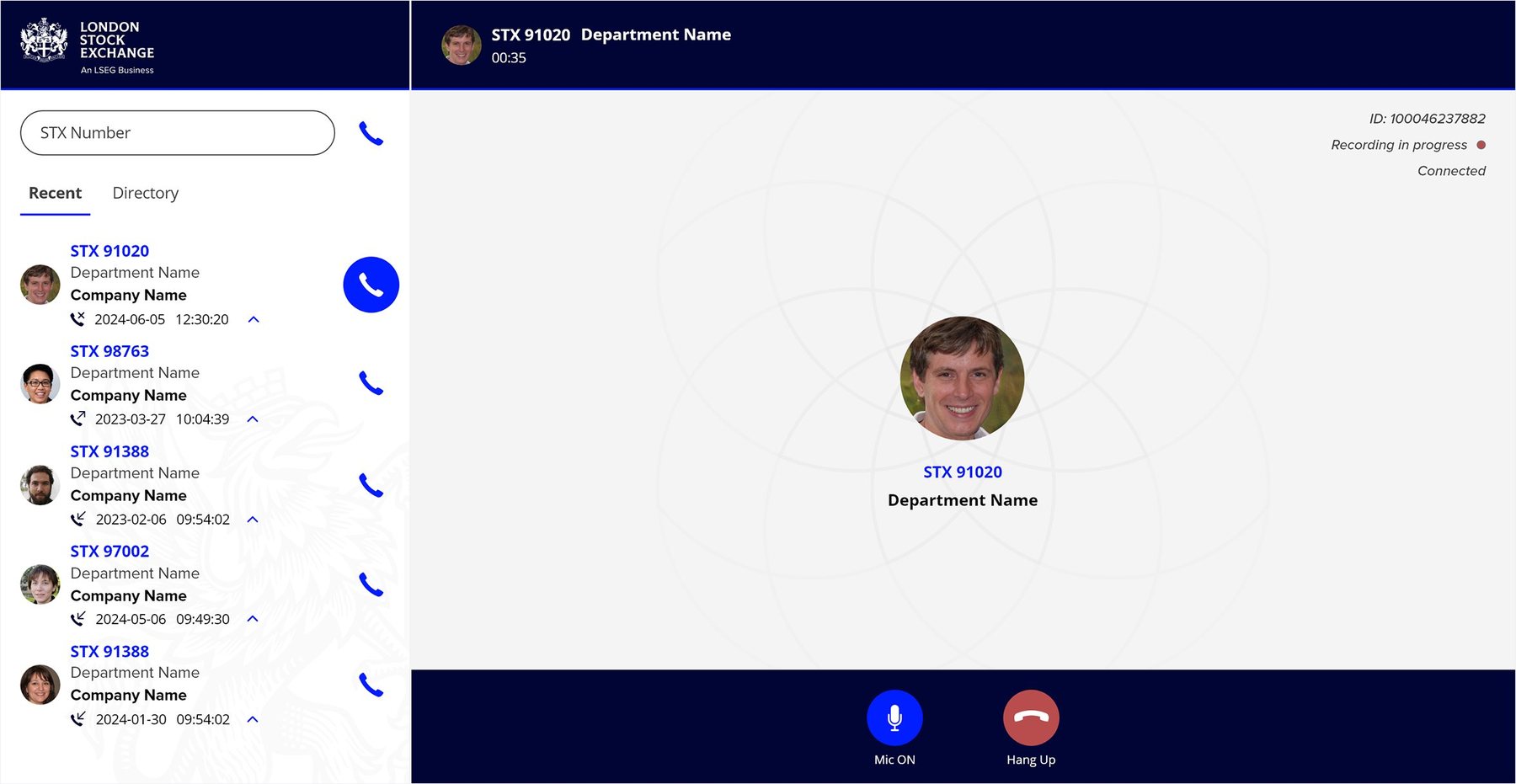
Call state precision was central to regulatory confidence.
I defined explicit differentiation between incoming, connecting, active, on-hold, recording and disconnected states. Recording status remained persistently visible during live sessions. Secure session indicators were embedded directly within the call interface so users could confirm encryption and network identity at all times.
Cross-platform Behaviour
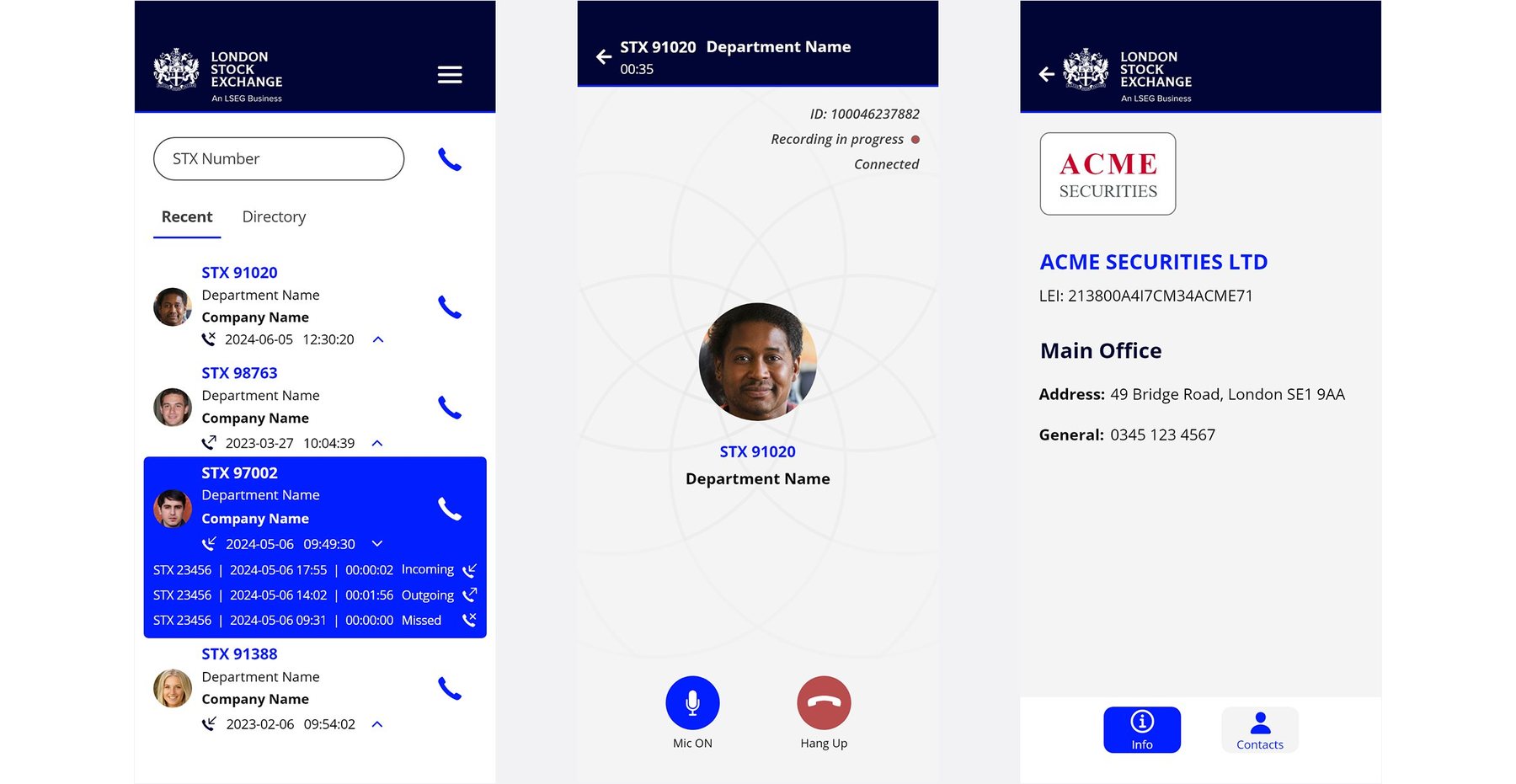
Browser and Android imposed different layout constraints. Interaction logic remained consistent.
I standardised:
- Call initiation sequence
- State hierarchy
- Control positioning logic
- Directory structure and search prioritisation
Someone moving between the browser client and their phone found calls, states and controls in the same places.
Administrative & Recording Control
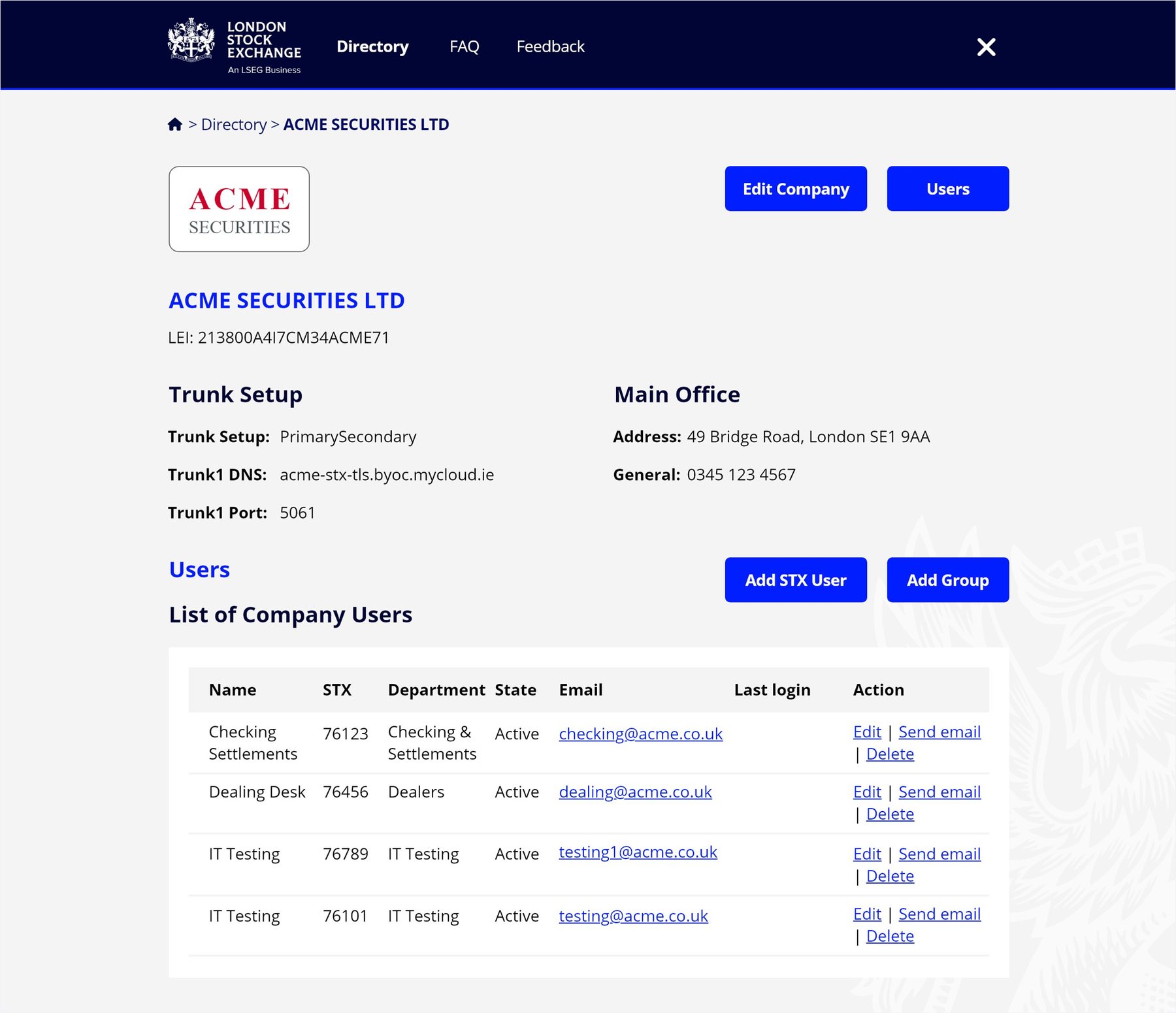
Compliance required structured oversight.
I designed administrative interfaces supporting extension visibility, session history and recording access workflows. Recording tooling was structurally separated from live communication controls to reinforce compliance boundaries.
Constraints & Trade-offs
- Interoperability with legacy Featurenet during phased migration
- Telecom infrastructure and SIP limitations
- Strict penetration testing and security standards
- Browser compatibility without plugins
- A fast, cost-effective build
- Regulated financial environment
Features were rolled out in phases to match the infrastructure migration.
Impact
- Enabled migration from PSTN to cloud-based communications
- Maintained interoperability during transition
- Preserved STX numbering continuity
- Delivered encrypted sessions with fixed-line equivalent security
- Passed penetration and ethical security testing
- Mvine programme, £1M multi-year. I led the UI and UX.
- Deployed across the STX network